Tesla Optimus Delivery Date Slips To Late 2027
Elon Musk cites unresolved issues with the robot's hands and AI as reasons for delaying external shipments of the humanoid.
By Miguel Hernandez ·
Elon Musk has officially pushed back the timeline for Tesla to begin shipping its Optimus humanoid robots to outside customers. During the company’s Q3 2026 earnings call, the Tesla CEO stated that deliveries are now expected to start around the end of 2027. This delay is primarily attributed to ongoing challenges with the robot’s mechanical hands, overall durability, and the underlying artificial intelligence systems that control its actions.
The delay marks a significant shift from earlier projections. In 2024, Musk suggested that high-volume production for external companies might begin in 2026. By January 2025, he had predicted the construction of approximately 10,000 robots that year, with several thousand performing useful work by the end of the year. Those targets have since been missed, leading to the current late-2027 goal for external sales.
Tesla has begun early production of the Optimus on its high-volume assembly line in Fremont, California. This facility previously manufactured the Model S and Model X vehicles. While much of the infrastructure designed to produce one million robots annually is already installed, Musk noted that reaching a production rate of 20,000 units per week will take at least another year. This extended timeline is due to continuous changes in the robot’s design that are still being finalized.
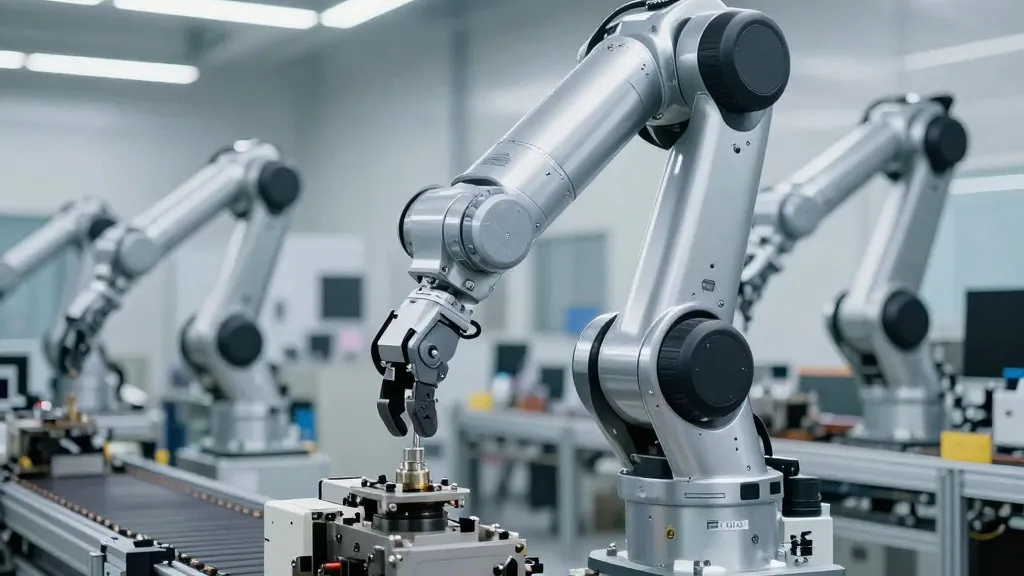
A major technical hurdle remains the robot’s hands. A Tesla Optimus engineer identified the hand as one of the most difficult hardware components to perfect, alongside custom gears that face reliability concerns. Musk explained that the fingers must be soft enough to handle delicate objects yet durable enough to withstand constant wear. Unlike human skin, which can heal, the robotic fingers cannot repair themselves, making this a critical engineering challenge.
On the software side, Tesla is still refining its AI architecture. The company lacks a large fleet of robots collecting real-world data in the same way its vehicles do for its Full Self-Driving program. To address this, Tesla plans to build between 10,000 and 20,000 robots to practice tasks in a facility called the Optimus Academy. Additionally, the company intends to integrate its AI5 chip into the robots by April 2027 to enhance their processing capabilities.
Musk promised to release a video within the next one to two months showing the Optimus performing tasks that are not pre-programmed. He argued that many existing humanoid robot demonstrations are misleading because they only run scripted routines that would fail in real-world conditions. This video is intended to prove that the robot can handle unscripted, general-purpose work.
Competitors are making steady progress in the humanoid robotics space. XPeng, a Chinese automaker, activated an automated production line for its IRON robot in Guangzhou in September. The IRON robot features hands with 21 degrees of freedom and runs on in-house Turing chips. XPeng plans to begin mass production by the end of 2026 and start deliveries in retail environments in the first half of 2027, a timeline similar to Tesla’s.
Boston Dynamics, owned by Hyundai, has also advanced its electric Atlas robot. Production of the Atlas began in January, and all deployments for 2026 are already committed to clients, including Google DeepMind. In September, the company opened a robot training center at Hyundai’s Metaplant in Georgia, where the Atlas is learning to sequence car parts. Hyundai aims to deploy 25,000 robots across its plants in the coming years, taking a pragmatic approach by prioritizing sturdy grippers over human-like dexterity.
Despite Musk’s assertion that no one is close to matching Tesla’s general-purpose humanoid progress, competitors are closing the gap. While Tesla may have built the most robots, the focus is now on making them useful and reliable. The next few months will be crucial, as Tesla’s upcoming video and continued production updates will determine if the late-2027 delivery date is realistic or if further delays are on the horizon.
Source: Electrek